Overview
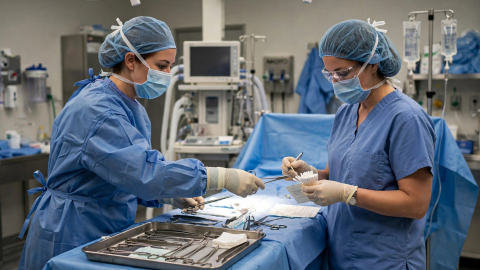
| A staff nurse is posted to a twenty-eight bed ward that holds eleven orthopaedic patients, four craniotomies, six transurethral resections on bladder irrigation, a free flap, two thyroidectomies and a new colostomy. She has had no training in any of them. This is the commonest staffing reality in Indian surgical services and it is a training problem. The course covers orthopaedic, spinal, neurosurgical, urological, gastrointestinal, breast and endocrine, plastic and burns, ENT, vascular and oncological nursing. |
What this course sets out to do
- To build orthopaedic nursing, covering traction, casts, the compartment syndrome that follows a tight one, joint replacement precautions and spinal surgery with the log roll.
- To establish neurosurgical nursing, with the Glasgow Coma Scale scored component by component, pupils, rising intracranial pressure, drains and shunts, head injury and trauma.
- To cover urological, gastrointestinal and hepatobiliary nursing, including bladder irrigation and the clot-blocked catheter, stomas, fistulae and the post-ERCP and bariatric patient.
- To cover breast and endocrine surgery with the four thyroid catastrophes, and plastic, reconstructive and burns nursing with flap monitoring in the critical first forty-eight hours.
- To cover ear nose and throat, ophthalmic, maxillofacial, vascular, amputation and oncological surgical nursing, and to build the unit's specialty competency framework.
What your staff will be able to do
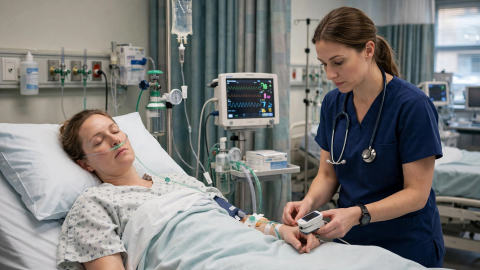
- Apply specialty-specific nursing observation on a mixed surgical ward, including neurovascular limb assessment, Glasgow Coma Scale and pupil assessment, flap perfusion monitoring and stoma assessment, at the documented interval.
- Manage the devices and drainage each specialty requires - traction and cast care, continuous bladder irrigation, external ventricular drain levelling, tracheostomy care - within the surgeon's instruction.
- Deconstruct a specialty deterioration - compartment syndrome, rising intracranial pressure, transurethral resection syndrome, anastomotic leak, a failing flap, post-thyroidectomy haematoma - into its earliest nursing-detectable signs.
- Appraise their ward's capability against its actual specialty case mix, and judge which observations, devices and emergencies the nursing establishment is not currently competent to manage.
- Design specialty observation and emergency action protocols with a specialty competency framework and assessment record, mapping each specialty to what a nurse must be observed performing before independent charge.
Eligibility
For registered nurses with valid State Nursing Council registration on orthopaedic, neurosurgical, urological, gastrointestinal, breast, plastic and burns, ENT, ophthalmic, maxillofacial, vascular and oncology wards and the mixed specialty wards that are the Indian norm, with theatre, stoma and wound care nurses, ward in-charges and nursing superintendents. Every specialty skill named requires separate direct observation.
Renewal & retraining
No statutory interval is prescribed. MedSkills recommends a two-year refresher. Hours count toward the Indian Nursing Council requirement of 150 CNE hours per five-year registration renewal cycle.
MedSkills recommends retraining every two years, or sooner if your hospital protocol, the equipment or the governing guideline changes. Inside the MedSkills LMS, expiring certificates are flagged automatically and refresher training is re-assigned before the due date.
Certification
Upon successful completion of this course, you will receive a tamper-proof digital certificate backed by blockchain technology from MedSkills. This secure, verifiable certificate validates your skills and can be shared on LinkedIn, added to your resume, or included in your professional portfolio.
Certificate Benefits
Blockchain-Backed Security
Tamper-proof certificates secured by blockchain technology
Instant Verification
Employers can verify authenticity instantly through blockchain
LinkedIn Ready
Share directly to your LinkedIn profile and resume
Digital Download
High-quality PDF certificate for printing
Global Recognition
Accepted by employers and institutions worldwide
Lifetime Access
Certificate remains valid and accessible forever
Certification Requirements
- Complete all course modules and assignments
- Achieve minimum 50% score in final assessment