Overview
| A man is four hours back from a laparotomy. His pulse is charted as rising on three separate rounds by two different nurses, in the correct boxes, in blue ink, and nobody escalates, because nobody has been taught that a rising pulse after laparotomy is a surgical emergency rather than a value to be recorded. He returns to theatre at midnight. The course covers handover, post-operative assessment, early warning scoring, haemorrhage, the complication set, discharge and audit. |
What this course sets out to do
- To establish the handover received on the ward and what must be in it, including the parameters that must trigger a call.
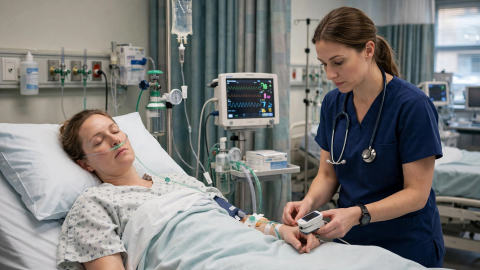
- To build systematic post-operative assessment with observation frequency set by procedure and risk rather than by ward routine.
- To teach recognition of the deteriorating surgical patient using NEWS2 with escalation that happens, naming the surgical patterns a general score blunts.
- To cover haemorrhage and shock, pain, fluids and the kidney, respiratory and thromboembolic complications, the wound, gastrointestinal and urinary recovery and surgical sepsis.
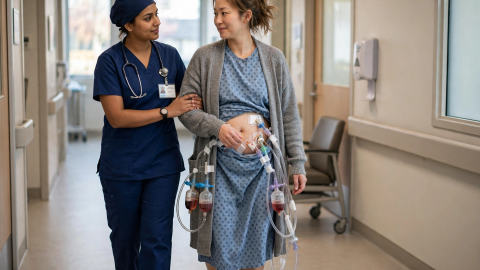
- To establish mobilisation, discharge instructions a patient with limited literacy can follow, red-flag teaching with a number to call, and a ward complication audit.
What your staff will be able to do
- Apply a systematic post-operative nursing assessment and set observation frequency by procedure and risk, covering wound, drain, fluid balance, pain, bowel, urinary, respiratory and neurological parameters.
- Apply an early warning score such as NEWS2 with the unit's escalation protocol, and execute an SBAR escalation that names the surgical concern rather than the number alone.
- Deconstruct a failure-to-rescue event into the observation, charting, scoring, escalation and response failures that preceded it, identifying the point at which the trajectory was still reversible.
- Distinguish concealed haemorrhage, anastomotic leak, sepsis and pulmonary embolism from expected recovery by examining trends in pulse, respiratory rate, urine and drain output, temperature and pain character.
- Design a post-operative observation, escalation and complication-recognition protocol for their own ward with a matching audit measuring time to escalation, time to response and preventable readmission.
Eligibility
Core for registered nurses with valid State Nursing Council registration on general surgical, orthopaedic, gynaecology and specialty post-operative wards, surgical high-dependency and step-down areas and day-care surgery, including nurses newly posted from medical or outpatient areas, with ward in-charges and quality managers. Wound dressing, nasogastric and catheter care require separate direct observation.
Renewal & retraining
NABH expects in-service training for all staff at least once a year. Hours count toward the Indian Nursing Council requirement of 150 CNE hours per five-year registration renewal cycle.
This is an annual requirement — staff must retrain every year and the certificate states when the next refresher is due. Inside the MedSkills LMS, expiring certificates are flagged automatically and refresher training is re-assigned before the due date.
Certification
Upon successful completion of this course, you will receive a tamper-proof digital certificate backed by blockchain technology from MedSkills. This secure, verifiable certificate validates your skills and can be shared on LinkedIn, added to your resume, or included in your professional portfolio.
Certificate Benefits
Blockchain-Backed Security
Tamper-proof certificates secured by blockchain technology
Instant Verification
Employers can verify authenticity instantly through blockchain
LinkedIn Ready
Share directly to your LinkedIn profile and resume
Digital Download
High-quality PDF certificate for printing
Global Recognition
Accepted by employers and institutions worldwide
Lifetime Access
Certificate remains valid and accessible forever
Certification Requirements
- Complete all course modules and assignments
- Achieve minimum 50% score in final assessment