Overview
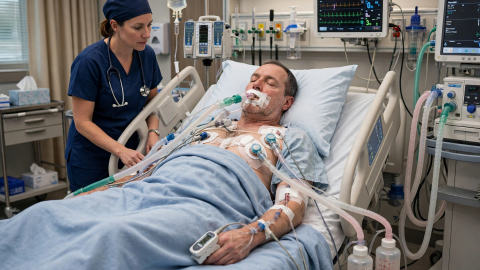
| A 68-year-old man with a dual chamber pacemaker is listed for magnetic resonance imaging and the nurse cancels the scan on the grounds that pacemakers and MRI are incompatible; the device is MRI-conditional, the card in his wallet says so, and the scan is deferred by eleven weeks. The course covers pacing indications, temporary and permanent pacing, defibrillators and resynchronisation, device follow-up, electrophysiology, cardioversion, ambulatory monitoring, rehabilitation and secondary prevention. |
What this course sets out to do
- To establish the recognition of bradycardia needing pacing now, and temporary transcutaneous, transvenous and epicardial pacing as a nursing procedure with its failure modes.
- To explain permanent pacemakers, implantable defibrillators and resynchronisation devices in plain terms, with the implantation episode and its immediate complications.
- To equip nurses to answer the device questions that recur on every ward - imaging, diathermy, radiotherapy, security gates, magnet use and the device patient who arrests.
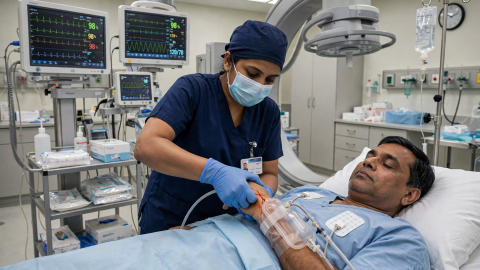
- To prepare nurses for electrophysiology study and ablation, elective and emergency cardioversion, ambulatory monitoring, the implanted loop recorder and structured syncope assessment.
- To build cardiac rehabilitation and secondary prevention as nurse-led work, covering exercise prescription, Indian tobacco forms, return to work, driving and psychological referral.
What your staff will be able to do
- Apply the set-up, threshold and sensitivity determination and safety checks for transcutaneous, transvenous and epicardial temporary pacing, recognising failure to pace, failure to capture and oversensing at the bedside.
- Perform the nursing sequence for elective and emergency cardioversion - consent, anticoagulation status, fasting, sedation and monitoring, pad placement, energy selection by protocol and the clear-and-shock safety sequence.
- Determine the urgency of a device-related presentation - a shock, multiple shocks, pocket swelling, wound discharge, arm symptoms, syncope or a non-functioning device - and the immediate nursing action.
- Evaluate the safety of a planned magnetic resonance scan, surgical diathermy, external defibrillation or radiotherapy in a patient with an implanted device, using the device card and unit protocol.
- Design a device patient information and shock plan package together with a nurse-led rehabilitation and device clinic specification, with referral criteria, session content, escalation and outcome indicators.
Eligibility
For registered nurses with valid State Nursing Council registration in coronary care, cardiac intensive care, cardiac wards, catheterisation and electrophysiology laboratories, device and pacemaker clinics, cardiac rehabilitation, emergency, theatres and imaging, with cardiac unit in-charges and nursing superintendents. Temporary pacing, cardioversion and defibrillation require separate direct observation; no course confers a provider card.
Renewal & retraining
No statutory interval is prescribed. MedSkills recommends a two-year refresher. Hours count toward the Indian Nursing Council requirement of 150 CNE hours per five-year registration renewal cycle.
MedSkills recommends retraining every two years, or sooner if your hospital protocol, the equipment or the governing guideline changes. Inside the MedSkills LMS, expiring certificates are flagged automatically and refresher training is re-assigned before the due date.
Curriculum
Certification
Upon successful completion of this course, you will receive a tamper-proof digital certificate backed by blockchain technology from MedSkills. This secure, verifiable certificate validates your skills and can be shared on LinkedIn, added to your resume, or included in your professional portfolio.
Certificate Benefits
Blockchain-Backed Security
Tamper-proof certificates secured by blockchain technology
Instant Verification
Employers can verify authenticity instantly through blockchain
LinkedIn Ready
Share directly to your LinkedIn profile and resume
Digital Download
High-quality PDF certificate for printing
Global Recognition
Accepted by employers and institutions worldwide
Lifetime Access
Certificate remains valid and accessible forever
Certification Requirements
- Complete all course modules and assignments
- Achieve minimum 50% score in final assessment