Overview
What this course sets out to do
- To explain bilirubin physiology and the recognition and measurement of jaundice, including the unreliability of visual estimation in darker skin.
- To establish the hour-specific threshold approach with nomogram use, the pre-discharge bilirubin and the follow-up appointment that prevents readmission.
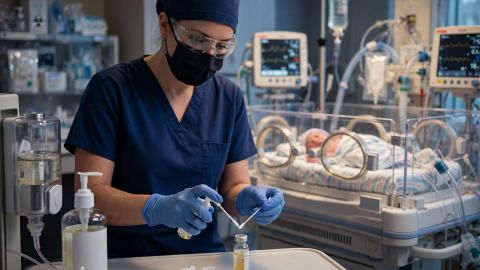
- To teach phototherapy as a therapy with a dose - irradiance, distance, exposed surface area, protection and hydration - and the reasons it fails to work.
- To cover exchange transfusion nursing, bilirubin encephalopathy, haemolytic disease, glucose-6-phosphate dehydrogenase deficiency and prolonged jaundice.
- To build nursing care for hypoglycaemia, metabolic and haematological problems, hypoxic ischaemic encephalopathy, therapeutic hypothermia, seizures and at-risk brain follow-up.
What your staff will be able to do
- Apply phototherapy as a measured dose - irradiance verified with a radiometer, correct distance, maximum exposed surface area, secured protection and hydration - and document the delivered dose.
- Manage neonatal hypoglycaemia in at-risk babies to the unit protocol, and recognise the baby whose glucose will not stay up as a different problem requiring escalation.
- Examine the unit's phototherapy failures and jaundice readmissions to establish how many were delivery failures of irradiance, distance, surface area or interruption time.
- Evaluate whether the unit's therapeutic hypothermia pathway - eligibility, time to target, monitoring, seizure recognition and rewarming - is delivered as written, using case data.
- Construct a phototherapy delivery and verification protocol with an irradiance measurement schedule, a lamp hours and tube replacement register and a bedside delivered-dose record.
Eligibility
Open to Level II and Level III neonatal intensive care unit nurses, special newborn care unit nurses operating phototherapy, postnatal ward nurses managing jaundice screening, NICU in-charge sisters, transport nurses accompanying babies for cooling, blood bank and laboratory staff, biomedical engineers and quality managers. Nurses must hold valid State Nursing Council registration.
Renewal & retraining
NABH expects annual refreshers and revalidation for high-risk roles, which includes this unit. Hours count toward the Indian Nursing Council requirement of 150 CNE hours per five-year cycle.
This is an annual requirement — staff must retrain every year and the certificate states when the next refresher is due. Inside the MedSkills LMS, expiring certificates are flagged automatically and refresher training is re-assigned before the due date.
Certification
Upon successful completion of this course, you will receive a tamper-proof digital certificate backed by blockchain technology from MedSkills. This secure, verifiable certificate validates your skills and can be shared on LinkedIn, added to your resume, or included in your professional portfolio.
Certificate Benefits
Blockchain-Backed Security
Tamper-proof certificates secured by blockchain technology
Instant Verification
Employers can verify authenticity instantly through blockchain
LinkedIn Ready
Share directly to your LinkedIn profile and resume
Digital Download
High-quality PDF certificate for printing
Global Recognition
Accepted by employers and institutions worldwide
Lifetime Access
Certificate remains valid and accessible forever
Certification Requirements
- Complete all course modules and assignments
- Achieve minimum 50% score in final assessment